- Climate Hazards Center
- Posts
- Climate Hazards Center February 2026 Newsletter
Climate Hazards Center February 2026 Newsletter
Welcome to the February 2026 Climate Hazards Center Newsletter! We plan to share these periodically to highlight our latest work, data updates and research.
An important activity at the Climate Hazards Center is the production of global climate datasets. But our work doesn’t stop there. CHC works with key partners to monitor agroclimate conditions in the world’s most food insecure regions and to support early warning and climate resilience efforts. We do this using advanced satellite technology, surface weather data, crop yield models and on-the-ground experts in these regions. CHC scientists also actively publish research and share the work with wide audiences. In this feature, we are highlighting data updates and a few recent activities. Ranging from operational support, research presentations, publications, and media coverage. Our activities reflect a goal that drives our work: To contribute information and innovations that support decision makers, have beneficial humanitarian impacts, and foster collaboration across scientific communities.
Latest News
CHIRPS2 Production to end after December 2026 and a transition to CHIRPS3
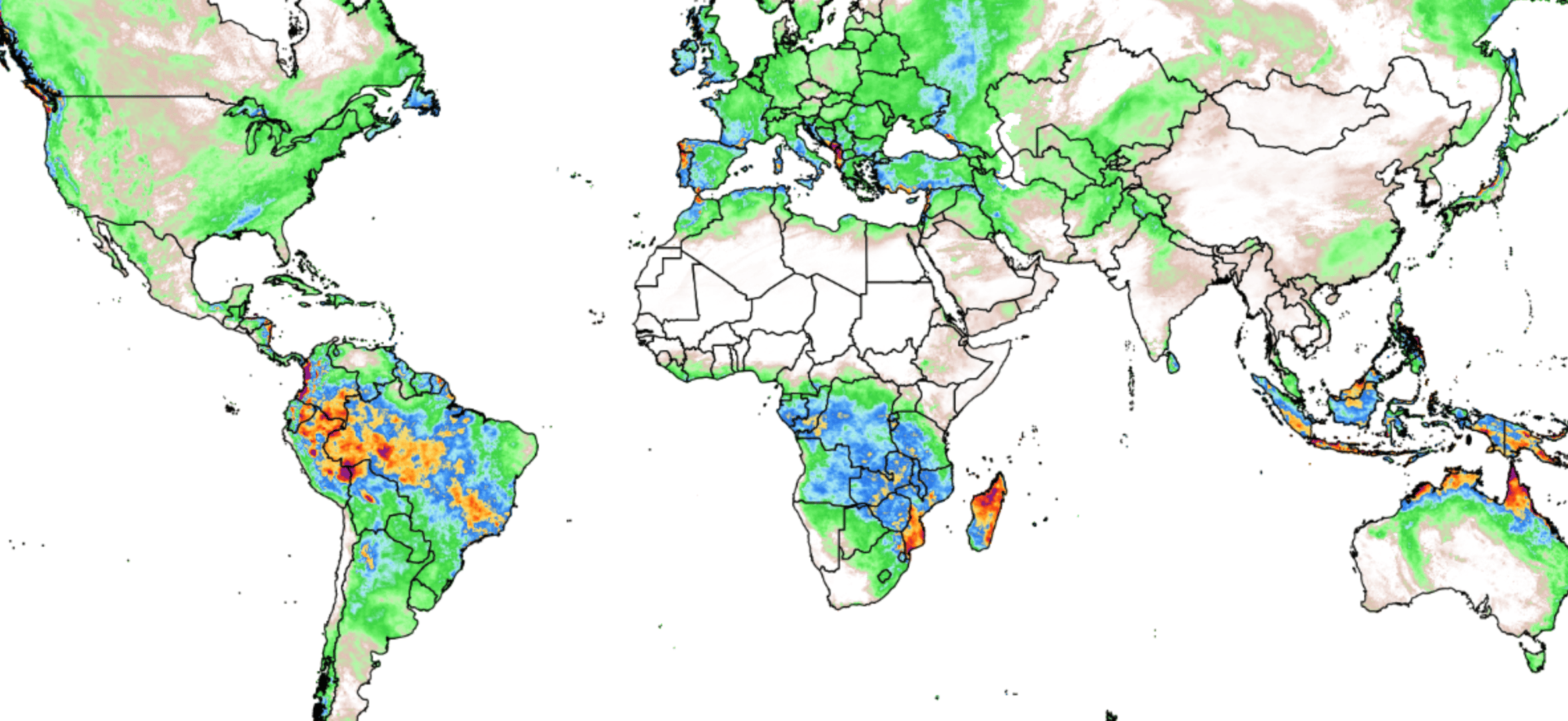 | The Climate Hazards Center has announced that the production of CHIRPS2 will end after December 2026. Users are advised that no new CHIRPS2 updates will be generated beyond this date. Existing CHIRPS2 datasets will remain available for download. Users should begin transitioning workflows to CHIRPS3, to ensure continuity of operations. More information about CHIRPS3 can be found at https://chc.ucsb.edu/data/chirps3 |
CHIRPS v3 available on Google Earth Engine
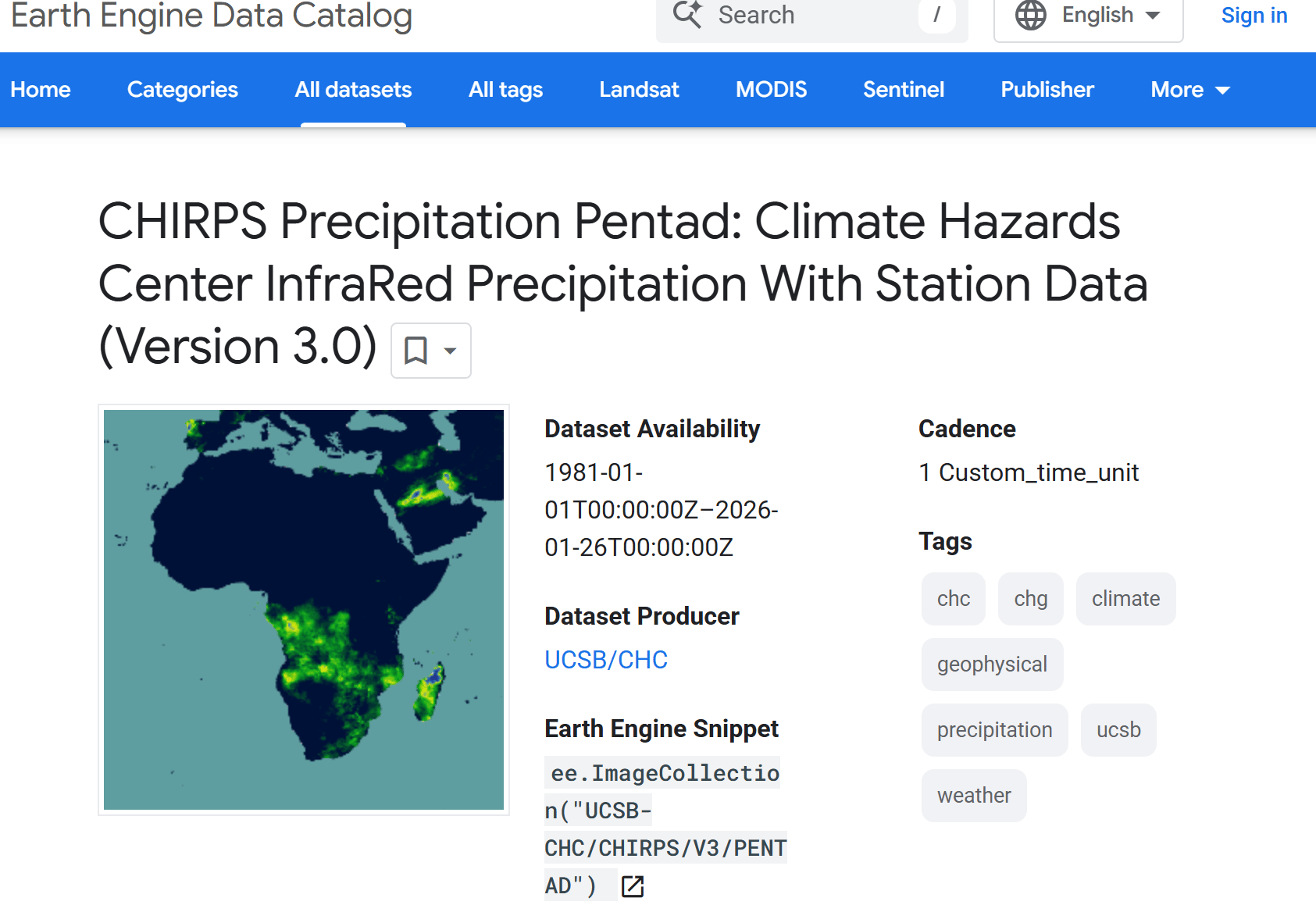 | The CHC is pleased to announce that CHIRPS3 is now available on Google Earth Engine. The dataset is accessible in both pentadal and daily timescales for use in various applications. For more information about Google Earth Engine and access to CHIRPS3 and select CHC datasets, visit: https://earthengine.google.com/ |
New Dataset: HarvesStat Africa — Subnational Crop Statistics
 | The Climate Hazards Center in collaboration with the Famine Early Warning Systems Network (FEWS NET), and 20+ science partners has built the world's largest harmonized subnational crop statistics dataset. HarvestStat contains over 574,000 agricultural records across 33 countries providing detailed statistics on crop production, harvested area, and crop yields at the provincial, district, county, and local government levels. This initiative is helping to bridge agricultural data gaps across Sub-Saharan Africa, and plans to expand its efforts to the Middle East and Asia. Read more |
Does humidity matter? Prenatal heat and child health in South Asia
 Photo credit: RapidEye via iStock | Dr. Chris Funk, CHC Research Director, worked with researchers at the University of California Santa Barbara to evaluate the effect of prenatal exposure to extremely hot, humid conditions on the health of children in South Asia. The study, published in Science Advances, used a set of high resolution datasets, including CHIRTS maximum temperature and maximum wet bulb globe temperature, and found that exposure to hot, humid conditions in-utero is dangerous for child health, and more dangerous than just hot temperatures alone. Read more |
Contrasting Changes in Rainy Season Length, Rainfall Frequency, and Intensity Across Eastern Africa
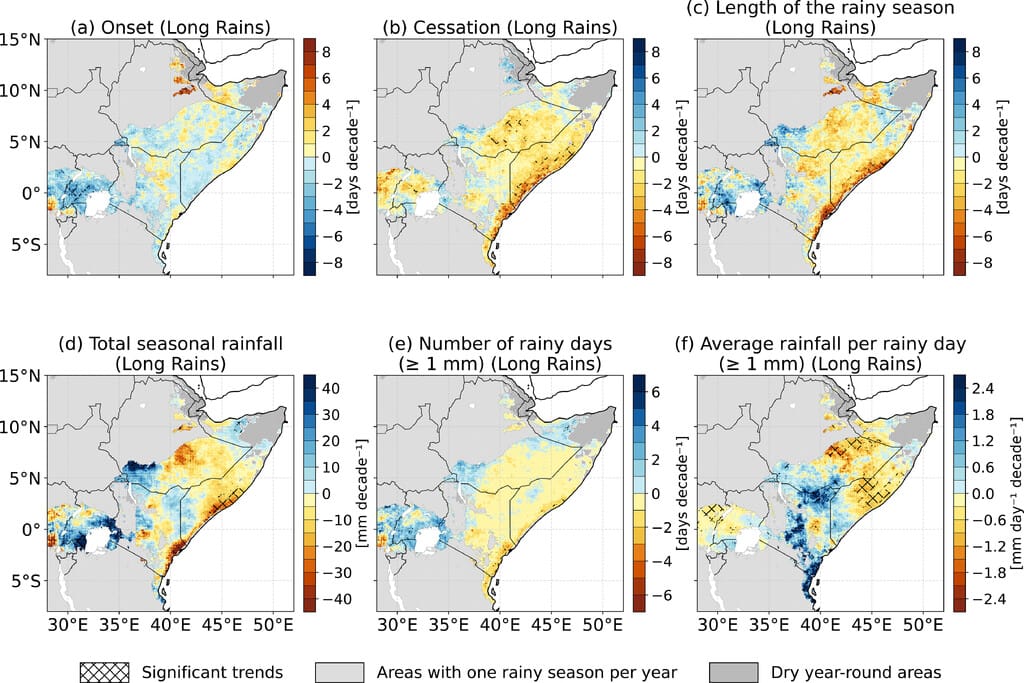 | Interannual rainfall variability poses significant challenges in East Africa, shaping agricultural outcomes and food security each year. In a new study, researchers at the Climate Hazards Center and the University of Florida evaluated long-term changes in intraseasonal rainfall patterns using CHIRPS dataset. The study, published in the Journal of Hydrometeorology, found that the critical March-to-May long rains in bimodal regions has shortened by up to a month and become drier with fewer rainy days. This study highlights emerging risks to rainfed agriculture and the importance of climate-informed adaptation strategies. Read more |
Advancing Subseasonal rainfall forecasts in Kenya with AI and increased weather observations
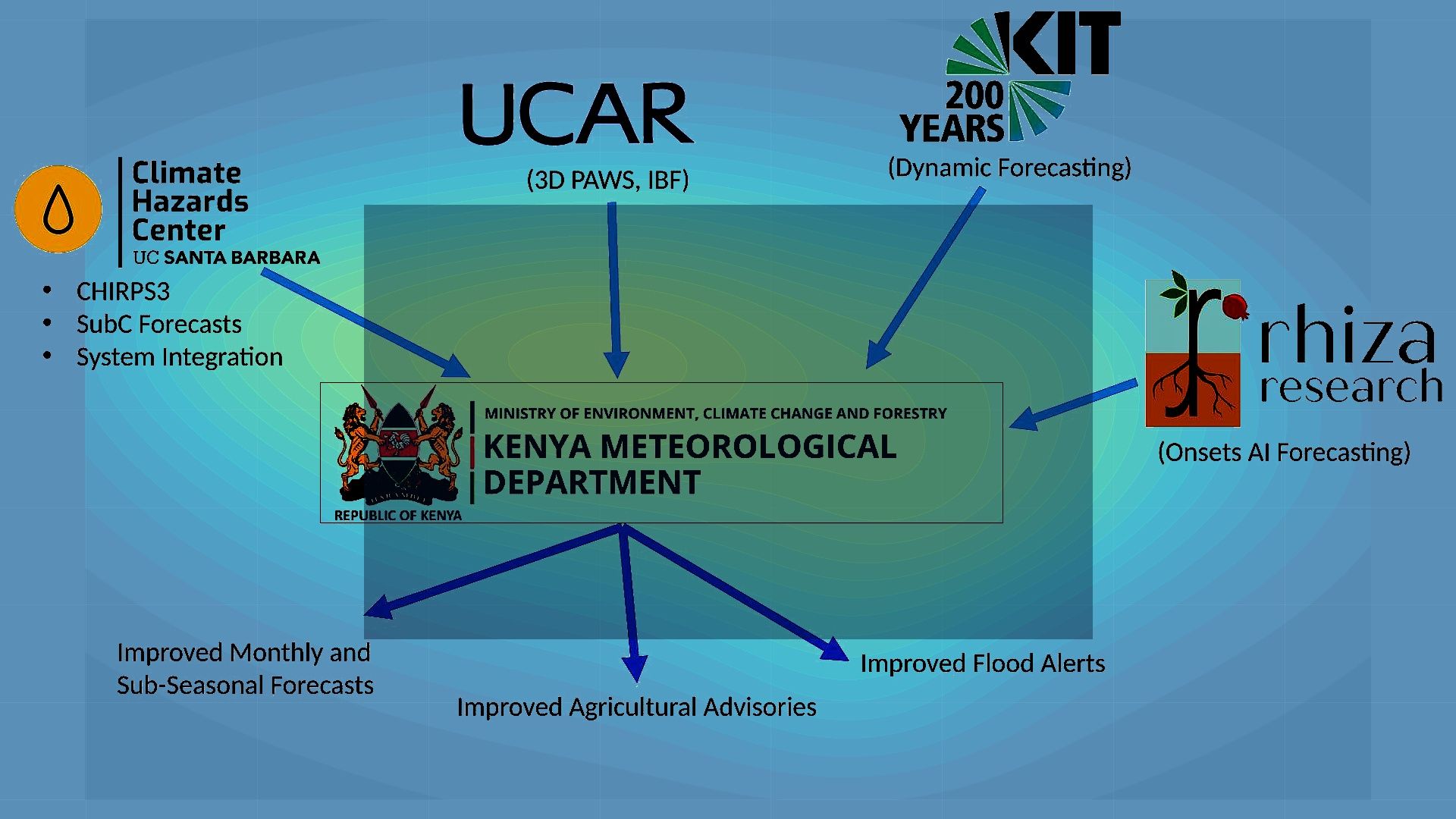 | The Climate Hazards Center is working closely with the Kenya Meteorological Department, the Karlsruhe Institute of Technology, the University Corporation of Atmospheric Research (UCAR), and Rhiza Research to strengthen rainfall monitoring and sub-seasonal forecasting in Kenya. This new initiative leverages the power of AI-driven forecasting tools, dynamical models, high-resolution datasets such as CHIRPS, and an expanding weather observation network supported by 3D-printed automatic weather stations to improve monthly and subseasonal forecasts. As the March-to-May long rains begin, these efforts will enhance early warning and decision-making. Access the latest report here |
Agroclimate Monitoring, Forecasts and Capacity Building
Agroclimate Monitoring Reports
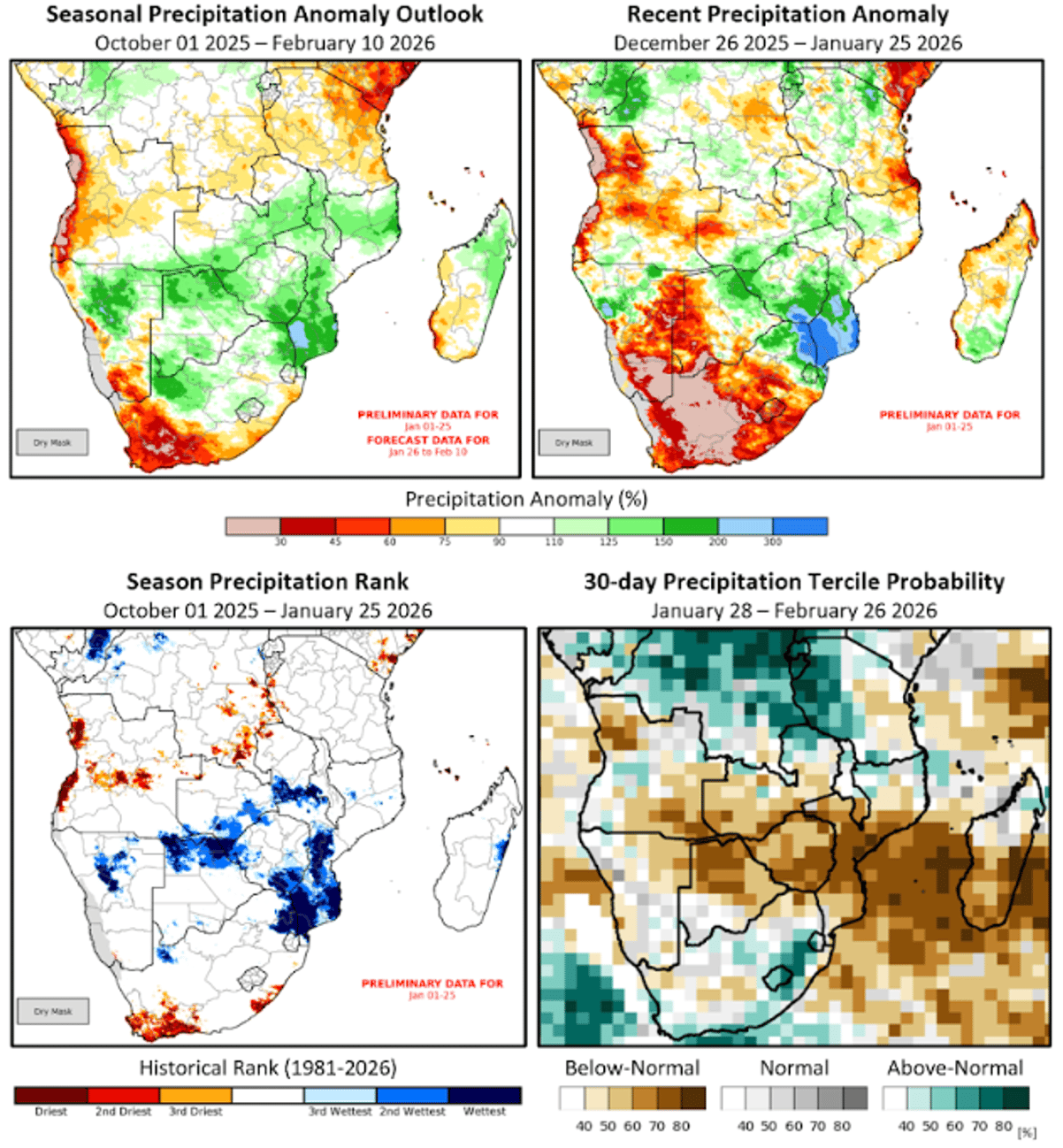 | The CHC continues to work with key partners to monitor agroclimatic conditions in the world’s most food insecure regions, to support food security early warning and decision making. See the latest reports below:
|
Enhancing climate services together: FEWS NET Water Point Monitor and GeoTools
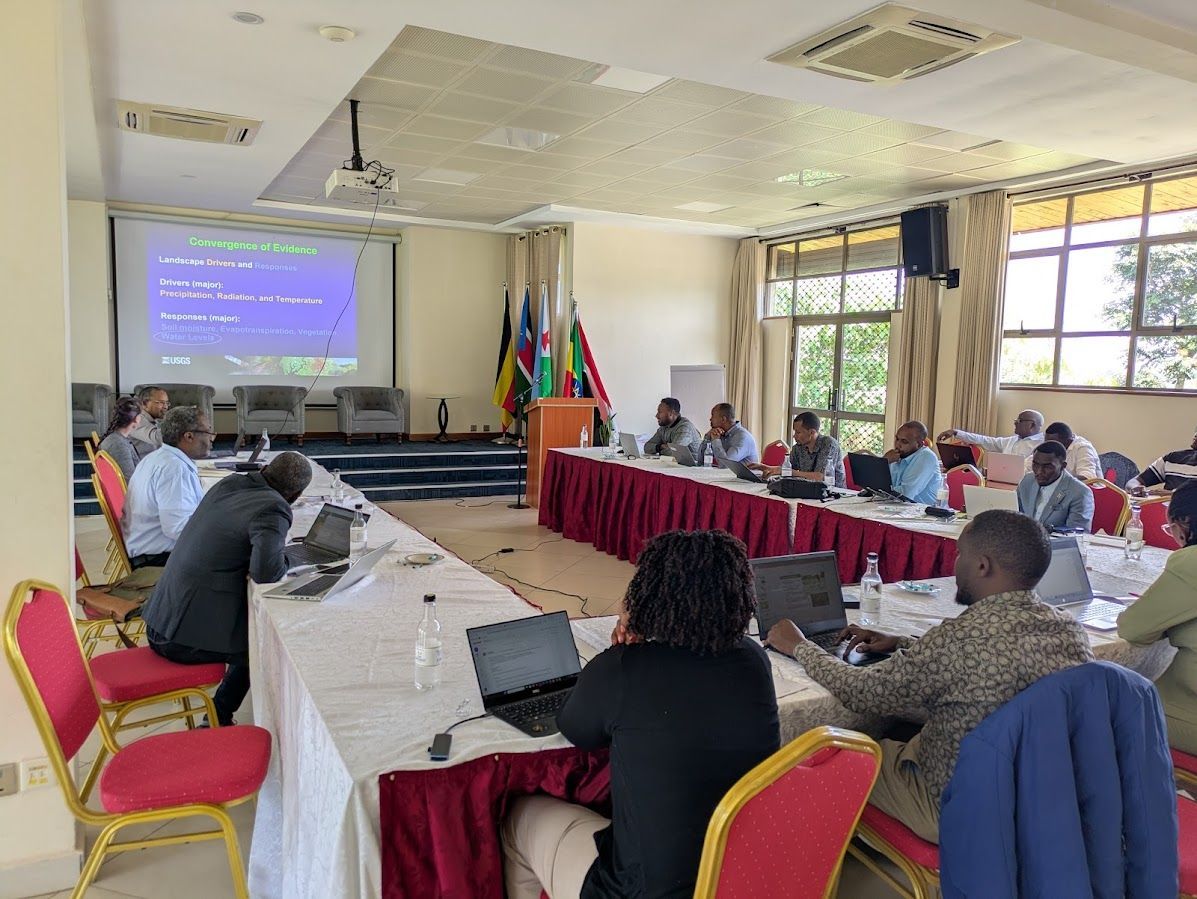
In late 2025, the Climate Hazards Center (CHC), in collaboration with the Famine Early Warning Systems Network (FEWS NET), joined colleagues across East Africa, Southern Africa, and West Africa for a series of regional workshops and technical trainings.
These engagements focused on strengthening drought early warning and agroclimatic analysis capacity. Key topics included the FEWS NET Water Point Monitor — an operational drought monitoring tool designed to track water availability and stress — and FEWS GeoTools, which support integrated agroclimatic data analysis for food security monitoring.
Participants engaged in hands-on exercises and technical discussions aimed at improving regional applications of climate data for decision-making.
The Climate Hazards Center continues to work closely with its partners to build a strong community of practice and foster innovative, locally informed solutions to climate-related challenges.
We are grateful for the continued collaboration of our partners and look forward to building on these efforts in the months ahead.